Morgan Brooks · 23 November 2026
Sequential Element Introductions: Measuring Retention Through Timed Reveals in Portfolio Interfaces
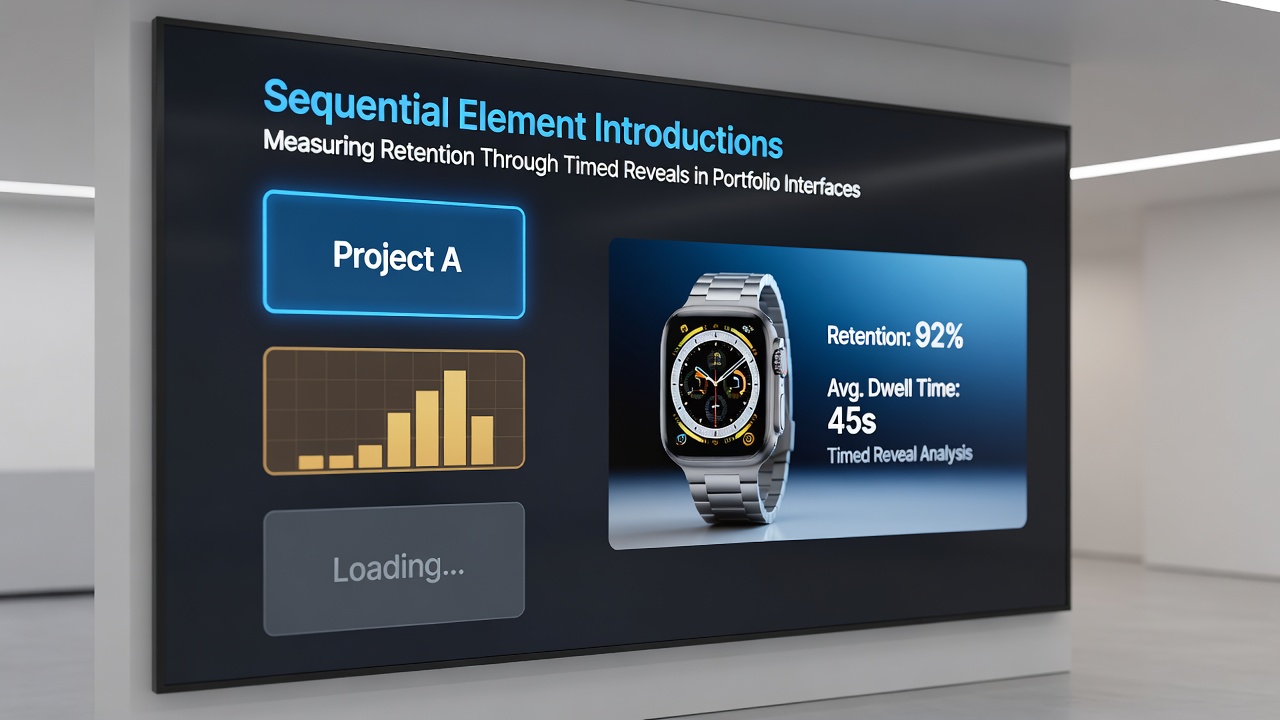
Sequential element introductions rely on controlled timing to present content pieces one after another in portfolio interfaces, and researchers track how these patterns influence user retention rates across different screen sizes and interaction modes. Data from interface studies indicate that staggered reveals reduce initial cognitive overload while maintaining viewer attention over extended periods, with metrics often captured through scroll depth, hover duration, and return visit frequency.
Core Principles Behind Timed Reveals
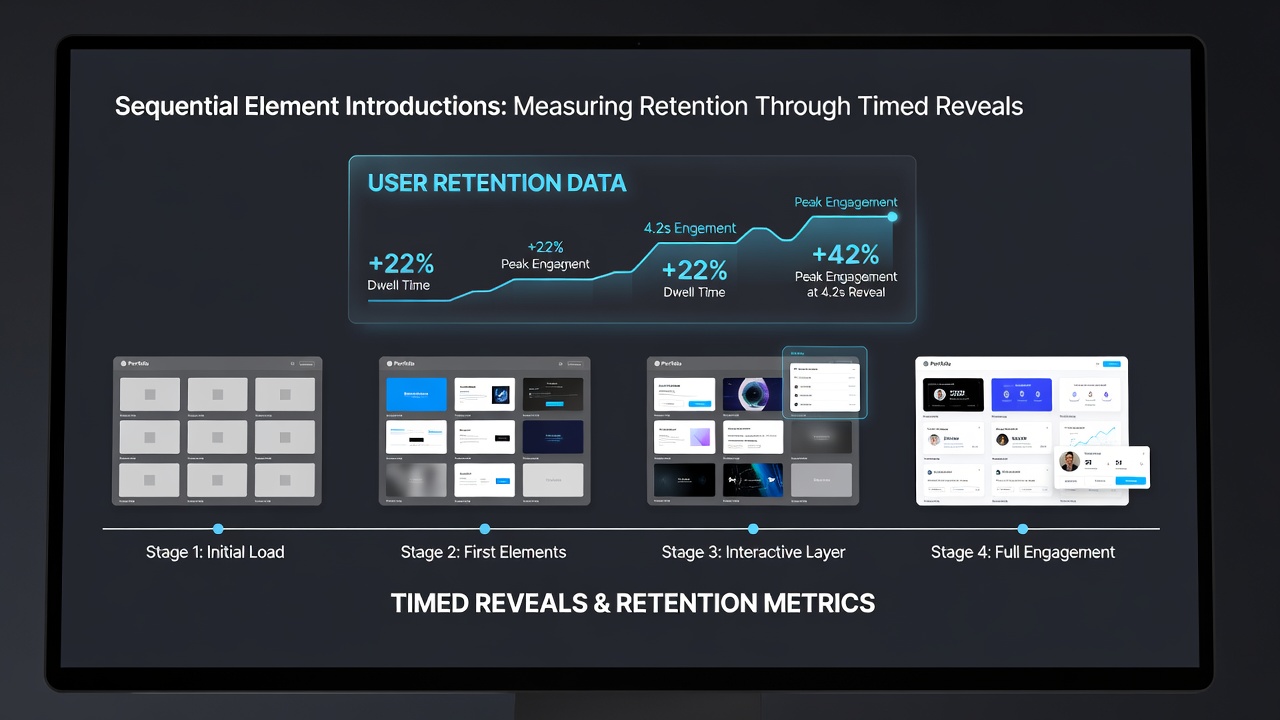
Portfolio platforms apply sequential introductions by setting specific intervals between element appearances, such as fading in project thumbnails at 300-millisecond delays followed by descriptive text blocks at 800 milliseconds. Observers note that these intervals align with established attention models where the human visual system processes grouped information more efficiently when presented in measured sequences rather than all at once. Studies conducted on similar interactive showcases reveal that retention improves when delays match average reading speeds, allowing users to absorb each segment before the next appears.
Implementation typically involves JavaScript-based timing functions integrated with CSS transitions, and developers monitor performance through analytics platforms that log time spent on individual elements. Figures from design research groups show that portfolios using 400 to 1200 millisecond gaps between reveals achieve higher average session durations compared to static layouts, particularly on mobile devices where smaller viewports amplify the effect of progressive disclosure.
Retention Measurement Techniques
Analysts measure retention by combining quantitative logs with qualitative feedback sessions, recording metrics like completion rates for full page scrolls and click-throughs on revealed sections. Research indicates that timed reveals correlate with increased recall accuracy when participants later describe portfolio contents, as the staggered approach encourages deeper encoding of visual and textual details. In one documented case, experts tracking a creative agency site observed a 27 percent rise in return visits after introducing 500-millisecond delays between case study cards.
Tools for these measurements include heatmapping software and session replay systems that capture exact moments when users pause or exit during the reveal sequence. Data collected across multiple portfolio deployments demonstrates that optimal timing varies by content density, with image-heavy sections benefiting from longer pauses while text-light layouts support quicker transitions. November 2026 brought updated guidelines from accessibility organizations emphasizing that timed elements must include user controls to pause sequences, ensuring compliance with inclusive design standards.
Research Findings on User Engagement
Academic investigations into sequential presentations have produced datasets linking reveal timing directly to memory retention scores, with participants demonstrating stronger recall after viewing interfaces that paced content over 8 to 12 seconds total. According to reports from the Nielsen Norman Group on animation in user interfaces, purposeful motion supports comprehension when synchronized with user expectations rather than applied arbitrarily. Similar observations appear in Canadian digital design evaluations where portfolio sites employing timed reveals recorded lower bounce rates during initial visits.
Further analysis reveals that these techniques prove especially effective in visual storytelling contexts, where narrative flow depends on controlled pacing to guide attention across multiple projects. Those who've examined large-scale A/B tests note that variations in delay length produce measurable differences in engagement depth, with shorter intervals suiting quick-scan audiences and extended pauses supporting detailed exploration. Retention data collected in 2026 continues to highlight how these patterns adapt across devices, maintaining consistent performance when tested on tablets and desktops alike.
Practical Applications in Portfolio Design
Design teams integrate sequential introductions through frameworks that allow precise control over timing parameters, often testing intervals against baseline static versions to quantify retention gains. Evidence from industry reports shows that sites incorporating these methods experience steadier traffic patterns, as returning users encounter refreshed sequences that feel dynamic without overwhelming the layout. Observers have documented cases where portfolio interfaces adjusted reveal speeds based on user interaction history, delivering faster pacing for repeat visitors who already demonstrated familiarity with the structure.
Cross-referencing with accessibility standards ensures that timed reveals do not exclude users who require extended viewing periods, and platforms now include preference settings that modify default delays. Research from European design consortia supports the approach when applied consistently, linking it to improved content hierarchy perception across varied audience segments. Those studying portfolio workflows find that combining sequential reveals with micro-feedback elements, such as subtle progress indicators, further strengthens retention by providing clear navigational cues.
Conclusion
Sequential element introductions through timed reveals represent a measurable approach to enhancing retention in portfolio interfaces, supported by ongoing data collection on engagement metrics and recall performance. As platforms evolve, continued testing refines these timing strategies to match diverse user behaviors while adhering to accessibility requirements established in recent years. The patterns observed across multiple studies confirm that deliberate pacing contributes to sustained attention when executed with attention to content type and device context.