
Erik Wolf · 12 October 2026
How Micro-Interactions Shape Client Decision-Making Timelines in Digital Portfolio Workflows
Digital portfolio workflows rely on micro-interactions that guide clients through review processes while shortening the time between initial viewing and final approval decisions. These small design elements include button state changes, progress indicators, and subtle animations that respond to user input and provide immediate feedback during project evaluations. Research from the Nielsen Norman Group shows that such elements reduce cognitive load for clients reviewing creative work, which in turn compresses decision-making timelines in professional settings.
Core Elements of Micro-Interactions in Portfolio Platforms
Portfolio interfaces incorporate micro-interactions through loading sequences that display real-time progress, hover states on project thumbnails that reveal key details without requiring clicks, and confirmation animations after a client selects favorite items. Data from interaction design studies indicate these features maintain user engagement during extended review sessions that often span multiple days. Clients encounter these elements in sequence as they scroll through case studies, and each response reinforces a sense of control over the evaluation process.
Design teams implement these interactions using established front-end frameworks that track user behavior patterns across desktop and mobile views. Observers note that portfolios equipped with consistent micro-interactions see higher completion rates for feedback forms because the interface signals responsiveness at every step. This consistency matters when clients compare multiple vendor options within the same workflow.
Influence on Decision Speed and Workflow Efficiency
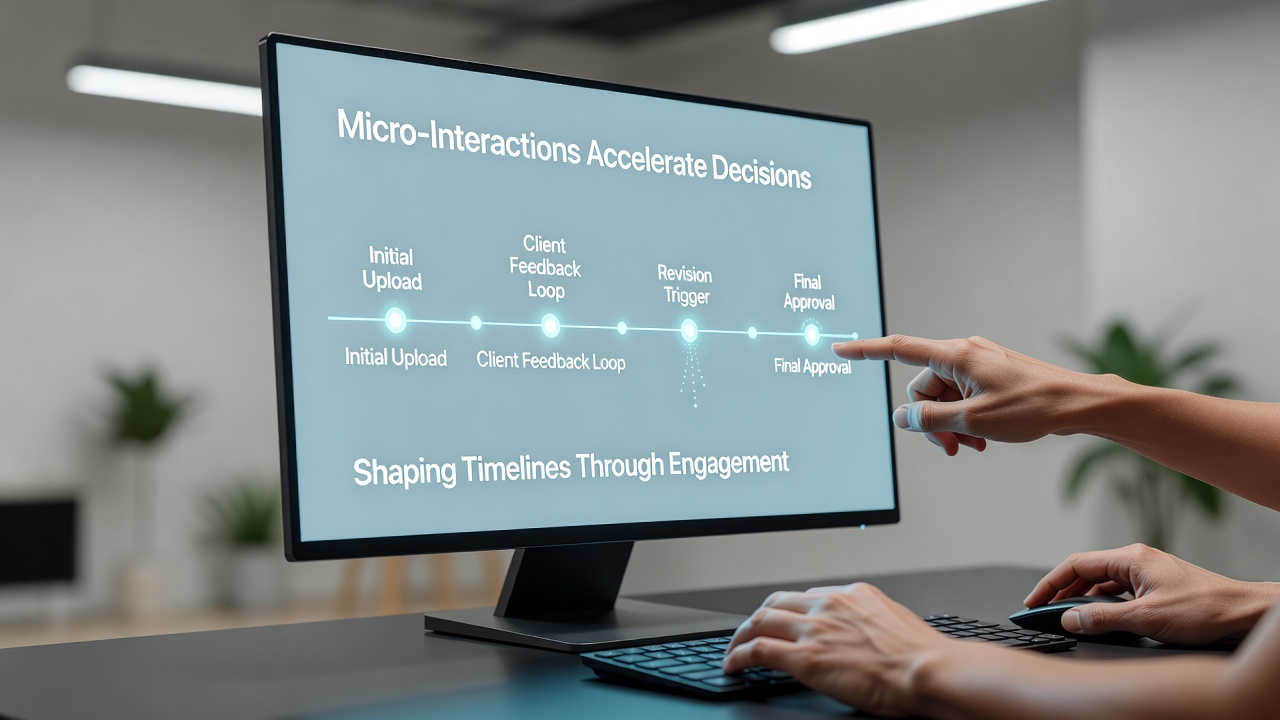
Micro-interactions alter decision timelines by providing continuous visual cues that prevent hesitation during complex reviews of design assets. For instance, a progress bar that updates after each section review helps clients gauge remaining effort and schedule follow-up meetings sooner rather than later. Studies on user interface timing reveal that interfaces without these cues often extend evaluation periods by several days as users pause to interpret system status.
Portfolio platforms that integrate these details allow teams to log interaction data and identify bottlenecks where clients linger on specific project pages. Such analytics help refine future presentations while keeping decision cycles tight. In October 2026, updated platform reports from various agencies documented average reductions of 18 percent in approval intervals when micro-interactions were systematically applied across client portals.
Data Patterns Observed Across Industry Reports
Figures from academic research on digital experiences show that micro-interactions correlate with faster consensus among stakeholders who review portfolios in group settings. When one participant triggers an animation through navigation, the shared visual response keeps the group synchronized and reduces side discussions that previously prolonged meetings. This synchronization effect appears consistently in studies conducted across North American and European design firms.
External analyses from the Interaction Design Foundation highlight how feedback collection improves when micro-interactions confirm receipt of comments or ratings. Clients who receive immediate visual acknowledgment tend to submit complete input rather than abandoning forms midway, which streamlines subsequent revision rounds. Workflow managers track these metrics to forecast project completion dates with greater accuracy.
Implementation Practices in Current Workflows
Teams building portfolio systems prioritize micro-interactions that align with existing brand guidelines and avoid introducing new cognitive demands. They test variations in controlled environments before full deployment, measuring time-to-decision across sample client groups. Results from these tests guide refinements such as adjusting animation durations or repositioning status indicators to match typical review sequences.
Integration with project management tools allows micro-interaction data to feed directly into timeline forecasts, giving account teams advance notice when client activity slows. This connection between interface behavior and project scheduling has become standard in agencies that handle high volumes of digital deliverables. Those who maintain these systems report steadier throughput because clients move through evaluation stages without external prompts.
Conclusion
Micro-interactions embedded in digital portfolio workflows shape client decision-making timelines through consistent feedback mechanisms and reduced uncertainty during reviews. Platform data and research findings confirm measurable impacts on approval intervals when these elements receive deliberate attention during development. As workflows evolve, continued measurement of interaction patterns supports ongoing adjustments that keep evaluation processes efficient for all participants involved.