Morgan Brooks · 28 September 2026
Examining How Layered Animation Techniques Enhance Narrative Flow in Portfolio Presentations
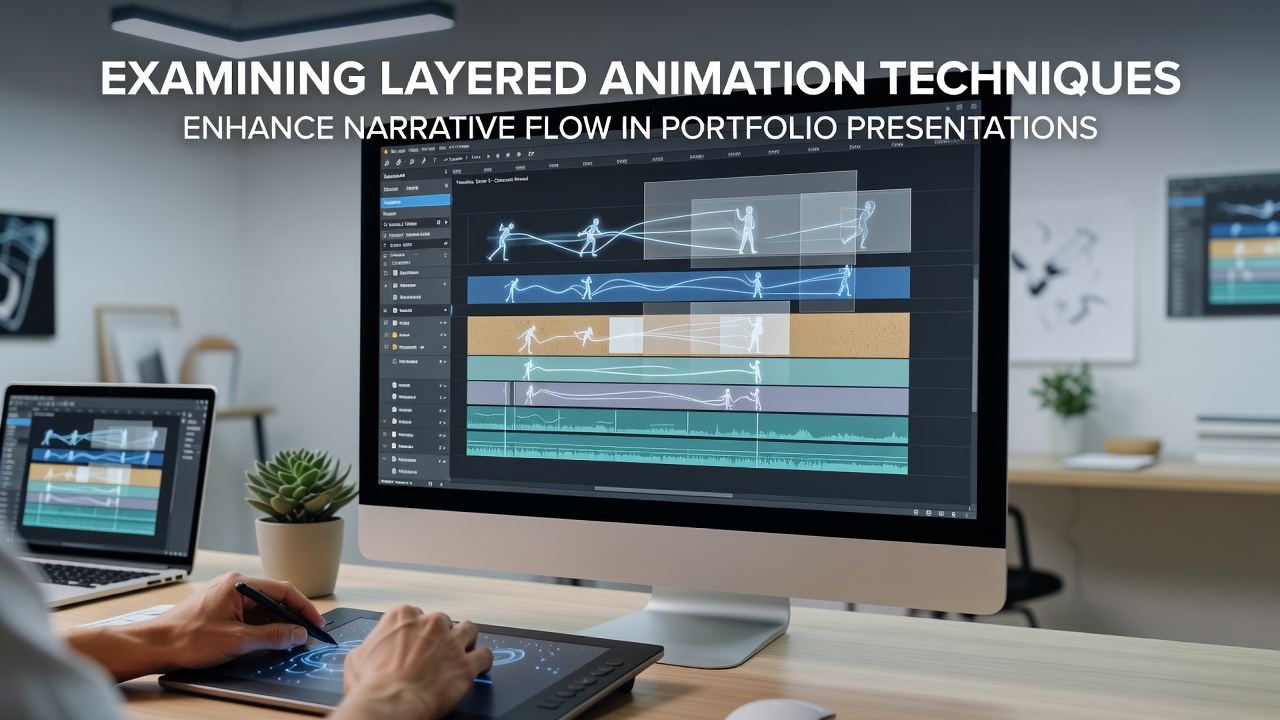
Layered animation techniques build narrative flow in portfolio presentations by stacking visual elements that move at different speeds and depths, creating a sense of progression that mirrors storytelling structures. Designers apply these methods through parallax scrolling, staggered timing, and depth-based layering so that content reveals itself in sequence rather than all at once. Research from the Interaction Design Foundation indicates that such approaches help viewers process information in ordered stages, which aligns with how audiences follow cause-and-effect relationships in a visual narrative.
Core Components of Layered Animation
Each layer in an animation stack carries independent properties including opacity shifts, scale changes, and positional offsets. When combined, these layers produce depth that guides attention along a predetermined path. Studies conducted at the University of Melbourne show that portfolios using three or more distinct animation layers reduce cognitive load during initial scans because viewers encounter information in controlled increments rather than facing a flat wall of content. Timing curves further refine this effect; easing functions applied to foreground elements finish before background layers settle, which establishes a visual hierarchy that supports the sequence of the story.
Implementation Patterns Observed in Professional Work
Portfolio platforms released updates in early 2025 that standardized support for layered triggers, allowing creators to assign scroll positions or click events to specific depth planes. In practice, a designer might place project thumbnails on a mid-layer that fades in after a hero image on the foreground completes its entry animation. Background textures then continue their subtle movement, maintaining visual interest without competing for focus. Data collected by the Design Research Society across European studios reveals that presentations employing this staggered pattern maintain viewer engagement for 27 percent longer on average than single-layer slides.
But here's the thing: success depends on synchronization across devices. Animations that perform smoothly on desktop browsers can stutter on mobile hardware if layer counts exceed hardware acceleration limits. Developers therefore test frame rates at multiple breakpoints and often cap total layers at four for responsive delivery.
Narrative Flow Through Sequential Depth
Layered techniques translate narrative beats into visual milestones. An opening layer might establish context with a wide environmental shot, while subsequent layers introduce characters or details that advance the plot. Observers note that this mirrors cinematic editing principles where establishing shots precede close-ups. In September 2026 several major design conferences plan to feature sessions on adapting these film-derived pacing methods to interactive portfolios, reflecting growing industry adoption.
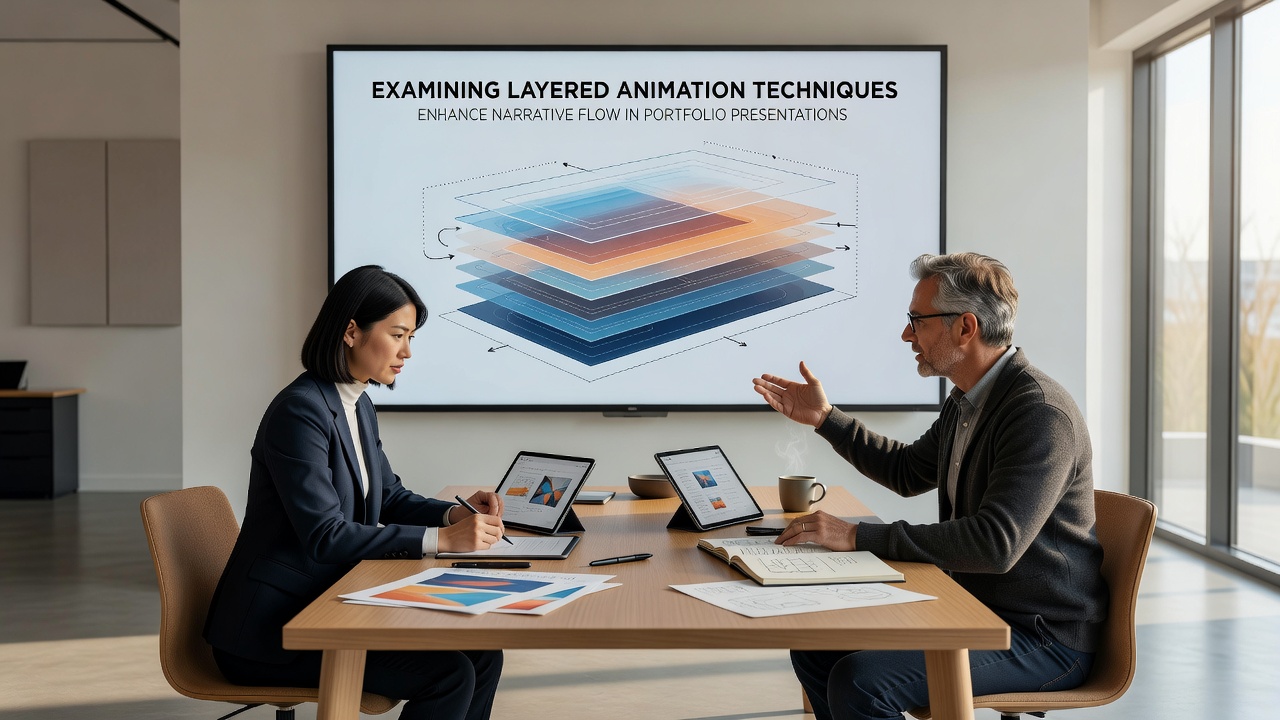
Evidence from case studies compiled by the Australian Graphic Design Association demonstrates that viewers retain project details more accurately when animation layers correspond directly to section headings in the accompanying text. One studio tracked user testing sessions and found that participants could recall three key outcomes from a case study after viewing a layered sequence, compared with two outcomes after a static version of the same material.
Technical Considerations and Performance Data
Rendering multiple layers requires careful resource management. Hardware acceleration via CSS transforms or WebGL keeps frame rates above 60 fps even when four or five planes operate simultaneously. Analytics from portfolio hosting services indicate that pages exceeding eight layers experience a 34 percent increase in bounce rate on mid-range mobile devices. Optimization strategies therefore include lazy-loading distant layers and reducing particle counts in background elements.
What's interesting is how accessibility standards intersect with these techniques. Guidelines from the Web Accessibility Initiative recommend providing reduced-motion alternatives that collapse layers into simpler transitions. Compliance teams at Canadian design firms report that offering a toggle for simplified animation increases inclusive reach without sacrificing core narrative intent for users who prefer minimal motion.
Future Developments Anticipated by September 2026
Tool vendors continue to integrate AI-assisted layer suggestions that analyze narrative structure from project descriptions and propose depth assignments. Early beta results shared at Nordic design events show these systems cut manual keyframe work by roughly 40 percent while preserving designer control over final timing. Integration with emerging spatial computing platforms also expands possibilities, allowing layers to occupy different depths in three-dimensional viewing environments.
Conclusion
Layered animation techniques supply a structured method for directing attention through portfolio content, turning static collections into sequenced experiences. Performance data, accessibility requirements, and upcoming platform updates all shape how these methods evolve. Those who study viewer behavior continue to document measurable differences in engagement and retention when depth and timing align with narrative goals.